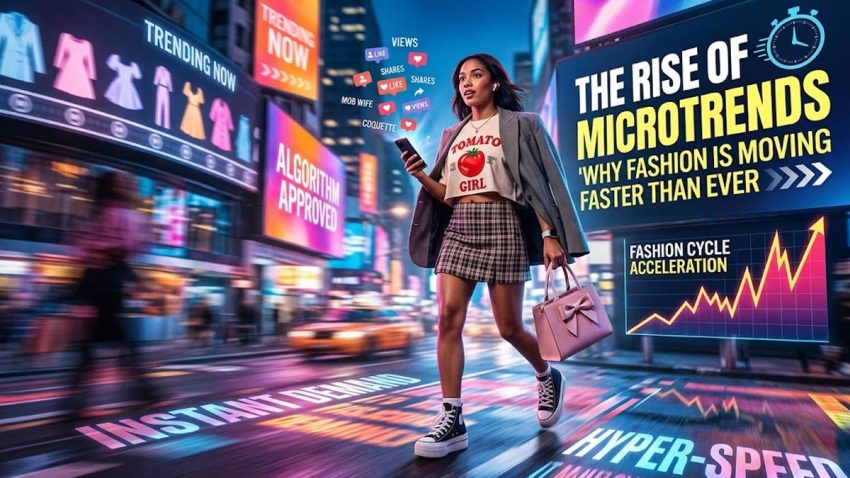
It used to take years for a trend to move from high-fashion runways to local department stores. Fashion operated on predictable, four-season cycles, giving consumers time to adopt, embrace, and slowly retire specific styles.
That system is completely broken.
Today, a single viral video can spark a global aesthetic overnight, spawn ultra-fast fashion mass production within a week, and render the look outdated in under a month. Welcome to the era of hyper-speed microtrends—where fashion isn’t just moving fast; it’s moving at the speed of the algorithm.
1. What Is a Microtrend?
Unlike traditional macro-trends that defined entire decades—like 70s bell-bottoms or 90s grunge—microtrends are hyper-niche aesthetics with hyper-short lifespans.
- Macro-Trend (Traditional): Lasts 5 to 10 years. Built on broad cultural movements and structural shifts in design.
- Microtrend (Modern): Lasts 2 to 6 months. Built around internet “aesthetics” with hyper-specific names (e.g., Tomato Girl, Mob Wife, Coquette, Office Siren).
These micro-aesthetics aren’t about building a lasting wardrobe; they’re about dressing up for a fleeting digital narrative.
2. The Engines Driving Hyper-Speed Fashion
Three core forces have converged to accelerate the fashion cycle to unprecedented speeds:
| Driver | Impact on Fashion Cycle |
| Algorithmic Feeds | Pushes specific visual themes into millions of feeds simultaneously, causing instant viral demand. |
| Ultra-Fast Fashion Supply | Brands like Shein and Cider use real-time data to design, produce, and ship items in as few as 7–10 days. |
| Identity as Content | Outfits are treated as disposable props for videos rather than long-term personal style investments. |
3. The Death of Personal Style?
The constant pressure to stay current has created a cultural paradox: the more choices consumers have, the more homogenized everyone looks.
- Trend Fatigue: Audiences are feeling burnt out by the relentless pressure to buy into the next big look before their last delivery even arrives.
- Loss of Longevity: Garments are designed for a single photo or video clip rather than years of wear, fueling massive environmental waste and consumer overconsumption.
- The Death of Subculture: Subcultures that used to take years to organically form in real-world spaces are now packaged, monetized, and exhausted online in a matter of weeks.
4. The Pushback: What Comes After Microtrends?
As consumers reach peak exhaustion with the endless conveyor belt of aesthetic core-culture, a counter-movement is gaining real momentum:
- Underconsumption Core: Celebrating repeat outfits, thrifting, and repairing old clothes.
- Archival & Vintage Fashion: Investing in unique pieces from past decades that resist algorithm-driven hype.
- Uniform Dressing: Rejecting weekly trends in favor of a timeless, highly personal daily capsule wardrobe.
Microtrends proved that fashion can move at digital speed—but the future of personal style belongs to those who choose to slow down.