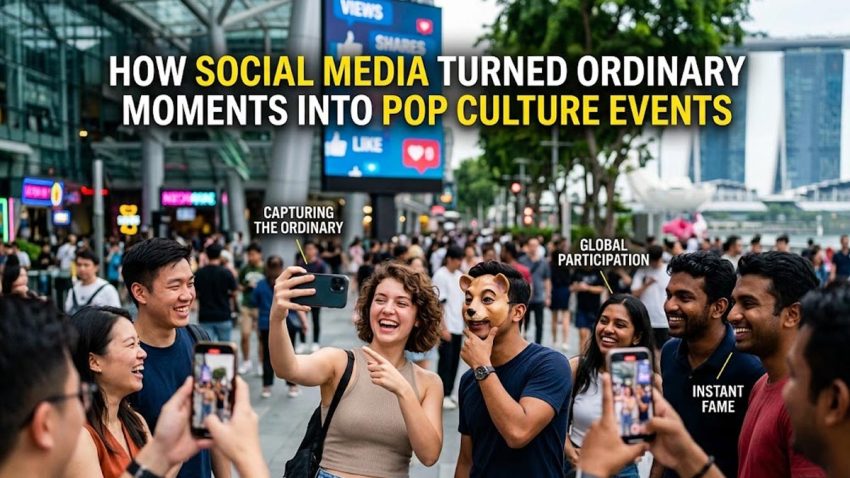
A woman trying on a Chewbacca mask in her car. A man skateboarding to work while sipping cranberry juice. A rat carrying a slice of pizza down a subway staircase.
In the pre-internet era, these would be fleeting, forgotten blips of daily life. Today, they are multi-million-view cultural landmarks that dominate news cycles, inspire global brand campaigns, and land ordinary people on late-night talk shows.
Social media hasn’t just sped up the news cycle—it has completely redefined what qualifies as a cultural event.
1. The Mechanics of the “Micro-Event”
How does a mundanely relatable second become a global spectacle? The journey relies on a specific viral pipeline:
- Relatability or Shock: An unedited clip captures raw, unscripted emotion or absurdity.
- Algorithmic Velocity: Feeds detect rapid early engagement and push the clip to millions within hours.
- Memetic Participation: The internet stops just watching and starts reproducing—using the sound, stitching the video, or making memes.
Once an audience participates in a moment, it shifts from passive media into a shared cultural touchstone.
2. The Death of Top-Down Pop Culture
For decades, gatekeepers decided what mattered: movie studios, record labels, and television executives. Today, the collective feed holds the crown.
| Traditional Culture Events | Modern Internet Events |
| High Production | Raw & Low-Fidelity |
| Planned months or years in advance | Unplanned and spontaneous |
| Top-down broadcast to masses | Bottom-up crowdsourced hype |
| Super Bowl commercials, Award shows | Viral TikTok sounds, Street-interview clips |
Audiences no longer wait for Hollywood to produce entertainment. A casual 15-second interaction at a local grocery store can outperform a $200 million movie trailer in viewer engagement and retention.
3. Why We Are Addicted to Mundane Lore
Psychologically, these micro-events satisfy a deep digital need:
- Shared Universal Reality: Seeing someone else navigate an everyday situation creates instant empathy and human connection.
- Low Stakes Engagement: Unlike heavy political news or complex entertainment sagas, viral ordinary moments are fun, accessible, and easy to enjoy.
- In-Group Belonging: Knowing the context behind a viral sound or meme makes users feel like part of an exclusive, global inside joke.
4. The Business of Turning Everyday Life Into IP
Brands and media conglomerates have quickly adapted to this shift. The moment an ordinary person goes viral, the monetization engine kicks in:
- Brand Hijacking: Companies rush to the comment section to drop witty remarks and secure ad placement.
- Instant Merchandising: T-shirts, soundbites, and digital assets are produced within 48 hours.
- The Creator Pipeline: Everyday individuals are transformed into full-time creators and brand ambassadors overnight.
In the modern digital landscape, you don’t need a red carpet, a agent, or a massive budget to make history. You just need a smartphone, an unscripted moment, and an algorithm hungry for real life.